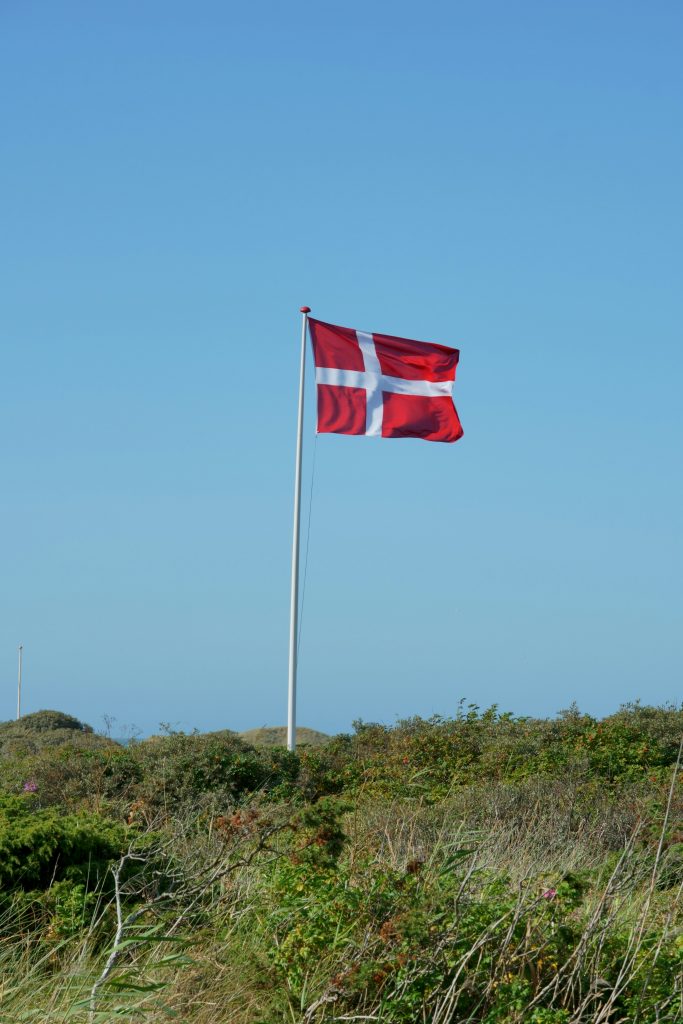
You finished the Danish tree (or you’re close), your owl is happy, and yet… when you click on a random DR news clip, it sounds like someone gargling potatoes through a wall. You can read a Danish menu. You cannot understand a Dane ordering from one.
If that’s roughly where you are, you’re not failing. You’ve just hit the actual ceiling of what a beginner app can do for Danish — and Danish, more than most languages, has a brutal gap between “I finished the course” and “I can function.”
Quick Answer: How to Learn Danish
Duolingo does not have a dedicated intermediate Danish track. Completing the full Duolingo Danish course is a good starting point for a beginner to get acquainted with the basics of the Danish language, and many find it helpful for early language learning, but it is still one tool and each person will progress differently. To reach intermediate (B1) Danish, learners need to add three things Duolingo cannot provide, and this will matter even more because many users find it insufficient once they want more advanced Danish skills: vocabulary breadth in real sentences (around 3,000–5,000 frequency-ranked words), natural-speed listening practice, and conversational output. The most efficient post-Duolingo stack combines Clozemaster for context-based vocabulary, DR (Danmarks Radio) podcasts for listening, dr.dk/ligetil for graded reading, and iTalki for speaking.
The rest of this article explains why Danish plateaus so hard around A2, and gives a concrete 3-month plan to bridge the gap.
Does Duolingo Even Have an Intermediate Danish Course Track?
No. Here’s the honest landscape.
Duolingo’s Danish course has 69 skills and 323 lessons. Compared to Spanish or French — which have Stories, Podcasts, and a constantly expanding Practice Hub across other online platforms — the Danish course is essentially: the tree, and that’s it. There are no Danish Stories, no Danish Podcast, and the newer Practice Hub features that exist for the big courses are mostly absent or thin for Danish.
If you complete the entire Danish tree, you’ve been exposed to roughly 2,000–2,500 word forms (and considerably fewer unique lemmas — base words). For reference, common CEFR vocabulary estimates are:
- A2: 1,500–2,500 words
- B1: 2,750–3,250 words
- B2: 4,000–5,000 words
So Duolingo’s vocabulary ceiling lands you near the A2/B1 border on paper — but only on paper, because vocabulary you’ve seen in a multiple-choice exercise is not the same as vocabulary you can produce or recognize in fast speech. It also offers limited explanations of basic Danish sentence structure, which makes it harder to understand how the language fits together beyond pattern recognition.
Bottom line: completing the Duolingo Danish tree typically produces an A1 level with elements of A2. Duolingo Danish is a beginner course; it does not have an intermediate tier.
Why Danish Specifically Plateaus Around A2
This is the part most “best apps for Danish” articles skip, and it matters.
1. The written–spoken gap is the single biggest issue with Danish.
Written Danish is, frankly, easy for English speakers. The grammar is gentle, word order is familiar, and the vocabulary is full of comforting cognates: hus (house), bog (book), vand (water), sommer (summer). Reading Danish at A2 feels almost cheap.
Then someone says it out loud and your brain melts.
Take a sentence like Det er det, det er. (Literally: “That is what it is.”) In writing: trivial. Spoken at natural speed by a Copenhagener: it sounds approximately like de e de de e — a soft mumble where consonants vanish, the d‘s become a kind of soft th-glide, and the whole thing fuses into one breath.
Or Jeg har ikke set ham (“I haven’t seen him”). Spoken: roughly ja ha ek se ham. Half the letters are decorative.
Then there’s stød — the glottal catch that distinguishes word pairs like hun (she) from hund (dog), or mor (mother) from mord (murder). More broadly, Danish pronunciation has its own challenge level because of distinct sounds like the soft d and unusual vowels. Duolingo’s text-to-speech is decent for individual words but doesn’t train your ear for the reduced, fast, mumbled Danish you’ll meet in real life, and dedicated pronunciation tools can help you practice those specific sounds more accurately.
2. Beginner apps teach breadth thinly. You see avis (newspaper) once or twice and it’s marked “learned.” That’s not learned. That’s introduced.
3. There’s almost no natural-speed listening input inside Duolingo Danish. You’re stuck with sentence-by-sentence robot voice.
4. The false fluency trap. Because written Danish is so accessible, it’s easy to overestimate your level — until a real Dane talks to you and your A2 confidence evaporates.
The core reason intermediate Danish is harder than it looks: spoken Danish reduces and fuses sounds far more aggressively than its spelling suggests, so listening comprehension lags written comprehension by a full CEFR level for most learners.
What “Intermediate Danish” Actually Means
B1 in practical terms looks like this:
- You can follow the gist of a slow-paced podcast on a familiar topic
- You can read news articles with occasional dictionary lookups
- You can have a conversation about your week, your job, your opinions — clumsily, but you can
- Your active vocabulary is around 2,500–3,000 words; recognition closer to 4,000+
B2 is where you can watch a Danish series with Danish subtitles and not feel like you’re drowning. That’s a real jump.
Duolingo can still help reinforce complex grammar and vocabulary if you type answers manually instead of relying on taps, which helps spelling and grammar retention, gives you more to remember, and can form a steadier practice habit.
The gap from end-of-Duolingo to B1 is mostly: listening comprehension, vocabulary breadth in context, and any actual speaking practice. Notice that’s three different skills, which is why no single app can finish the job.
A Practical Stack for Reaching Intermediate Danish
Forget “the best app.” Build a stack by skill.
Vocabulary expansion (the breadth problem)
The core issue post-Duolingo is that you know maybe 1,500 words, and B1 needs roughly double that — encountered repeatedly in Danish sentences for vocabulary building, not single-word flashcards stripped of context.
This is exactly the problem Clozemaster is built to solve. Clozemaster uses a cloze-deletion methodology and a gamified approach: you’re shown a context-rich sentence in Danish with one word missing, and you fill in the blank. Every sentence is drawn from a corpus and ordered by word frequency, so you spend your time learning the words you’ll actually encounter, in the order you’re statistically most likely to meet them, at a sustainable pace that keeps practice fun.
Han___ aldrig kaffe om morgenen. (drinks / drikker)
Three things make this approach particularly suited to the post-Duolingo Danish learner:
- Frequency-ranked content. The Danish course is built around the most common words in the language, so you don’t waste reps on vocabulary you’ve already seen in Duolingo. The Fluency Fast Track targets roughly the 1,000th–10,000th most common words — exactly the A2-to-B1 vocabulary band.
- Sentences, not isolated words. Because every word is encountered inside a real sentence, you absorb collocations and grammar patterns that flashcard apps miss — for example, tage en beslutning (“make a decision,” literally “take a decision”).
- Listening mode. You can switch sentences to audio-only, which forces ear training on words you already half-know in writing — directly attacking the written–spoken gap that’s specific to Danish.
For intermediate learners, instant recall matters for Danish sentence structure, and Speedrun modules are especially useful for Danish word order and placement of negatives.
If you’ve been searching for “the intermediate Danish app” that picks up where Duolingo leaves off, the honest pitch is narrower: Clozemaster solves the vocabulary-breadth-in-context problem. It’s not a Duolingo replacement — it’s the next layer.
Listening and Danish Pronunciation (the Danish-specific bottleneck)
This is where you must spend time, even when it’s painful.
- DR (dr.dk) — Danmarks Radio has free podcasts and TV, and DR Podcasts cover diverse topics for immersive listening. Start with their kids’ news Ultra Nyt — clearly enunciated, short.
- DanishClass101 — podcasts that are especially helpful for listening and pronunciation practice in real life situations.
- “Bevar mig vel” and “Simple Danish Podcast” — slow, learner-aimed, with useful phrases you can reuse in daily life.
- “Klog på sprog” — about language, slow-ish, fascinating if you like linguistics, with cultural insights along the way.
- DR’s Nak & Æd or any cooking show — visual context carries you through and gives you more of the culture.
Trick: use the Subtitle Method: first watch with English subtitles to train your ear for conversational rhythm, then switch to Danish subtitles, and finally watch without subtitles to connect spoken and written Danish. Active listening means translating spoken Danish phrases in your head and mimicking intonation with these tools.
Daily exposure to Danish media, native audio, and contextual reading improves pronunciation, conversational flow, and cultural understanding.
Reading
- dr.dk/ligetil — DR’s “easy Danish” news section, written specifically for learners and people with reading difficulties, and reading Danish news here helps build vocabulary in context. Genuinely the best free B1 reading material in Danish.
- Anders And & Co. — yes, Donald Duck. Danes grew up on it, the language is conversational, the pictures help.
- Graded readers from Lindy Books or Alinea.
Where available, use placement tests to find more challenging Danish reading at the right pace, tailored to your level if you prefer a clearer next step.
Speaking and output
- iTalki — Danish tutors are fewer than for big languages but they exist; expect €15–25/hr. Even one hour a week changes everything.
- Tandem / HelloTalk — Danes are unusually generous with English, which is a problem; insist on Danish or you’ll never get there. These online platforms help you find exchange partners who strengthen your skills beyond what an app provides, and they also connect you with a community for cultural exchange that helps you understand Danish customs and practice with friends.
Grammar reference
You don’t need to “do” grammar at this stage; you need a reference for when something confuses you. “Danish: An Essential Grammar” by Lundskær-Nielsen & Holmes is the standard. Bookmark it; don’t read it cover to cover. Use it for quick grammar tips and clear explanations when lessons feel thin, and pay attention to corrections on gender and plural forms when reviewing mistakes.
A Sample 3-Month Post-Duolingo Plan
Vague advice is useless. Here’s a concrete 30–40 minutes/day plan that actually works for the post-Duolingo learner. Duolingo’s lessons are built for daily practice and retention, but at this stage they are not enough on their own, so use them to support daily life study while moving at your own pace.
Month 1 — Stop the bleeding, build a base
Daily (~30 min):
- 15 min Clozemaster — Fluency Fast Track, Danish. Aim for 30–40 sentences/day. This rebuilds vocabulary breadth in real context.
- 10 min listening — one episode of Simple Danish Podcast or DR’s Ultra Nyt. Listen twice: once cold, once with transcript.
- 5 min reading — one short article from dr.dk/ligetil.
Weekly:
- One 30-min iTalki lesson (or write a 150-word journal entry if budget is tight)
Goal: 500 new words encountered in context, 30 minutes of real Danish audio per week, one conversation.
Month 2 — Push the listening
Daily (~35 min):
- 15 min Clozemaster — keep going; switch on listening mode for some sessions so you have to type the word from audio, not text. This forces ear training on the words you already half-know.
- 15 min listening — graduate to real DR podcasts on familiar topics. Re-listen to favorites; repetition is where comprehension is built.
- 5 min reading — extend to one full ligetil article + skim a real news headline.
Weekly:
- One iTalki lesson, plus one written journal entry your tutor corrects.
Goal: comfortable with slow native speech on familiar topics; reading real (not graded) headlines.
Month 3 — Bridge to native content
Daily (~40 min):
- 10 min Clozemaster review — focus on review queue and reinforcement of mastered words.
- 20 min native content — a Danish series with Danish subs. Borgen, Forbrydelsen, Rita — pick one and stay with it. One episode might take you a week.
- 10 min reading — a real article, looking up no more than 5 words.
BetterDanish is a tailored, conversational option if you want more guided speaking exposure through immersive practice.
Babbel is useful for real life situations and conversational topics, Minlaering offers structured materials across levels, and for pronunciation you can use tools like Forvo audio clips or RhinoSpike native recordings as part of the combination.
Weekly:
- Two iTalki lessons if possible. Speak only Danish.
Goal: solid B1 self-assessment, one full Danish series watched with Danish subs.
This is roughly 30–40 hours over three months. It is not magic — but it is enough to feel a real shift, especially in listening.
How to Know You’ve Actually Reached Intermediate
Forget badges. Use a self-test. Read these sentences. If you understand most of them without help, you’re crossing into B1 territory:
- Jeg plejer at tage toget på arbejde, men i dag tog jeg cyklen. (I usually take the train to work, but today I took the bike.)
- Hvis det ikke regner i morgen, går vi måske en tur i skoven. (If it doesn’t rain tomorrow, we’ll maybe go for a walk in the forest.)
- Hun sagde, at hun ikke havde tid, fordi hun skulle hente sin søn. (She said she didn’t have time because she had to pick up her son.)
- Det var faktisk billigere, end jeg havde regnet med. (It was actually cheaper than I’d expected.)
- Jeg er ikke sikker på, om jeg har forstået dig rigtigt. (I’m not sure if I’ve understood you correctly.)
- Selvom jeg har boet i Danmark i tre år, har jeg stadig svært ved at forstå jyder. (Even though I’ve lived in Denmark for three years, I still have a hard time understanding Jutlanders.)
- Det kommer an på, hvor meget du er villig til at betale. (It depends on how much you’re willing to pay.)
- Han burde have sagt det noget før, synes jeg. (He should have said so a bit earlier, I think.)
If sentences 1–4 are easy and 5–8 are doable with effort, you’re at solid A2+ heading into B1. If you breeze through all eight including reading them aloud and being understood, you’re B1 and your listening is probably your last weak link. If you can read these but still struggle with basic conversations, that’s a sign the next challenge is more conversational immersion; BetterDanish-style practice offers a conversational, immersive learning experience, while speaking exercises help turn passive knowledge into usable Danish.
If you want a continuous version of this kind of test built into your daily practice, that’s effectively what Clozemaster does: every cloze sentence is a tiny self-assessment of whether you can produce the right word in a real Danish context. Try the Danish Fluency Fast Track on Clozemaster for two weeks and see how far past your Duolingo vocabulary it pushes you.
FAQ
Is Duolingo enough to learn Danish? No. Duolingo Danish is a competent beginner course but does not contain enough listening practice, vocabulary breadth, or speaking output to reach intermediate (B1) level on its own.
What CEFR level is Duolingo Danish? Completing the full Duolingo Danish tree generally produces an A1 level, with strong learners reaching low A2. Duolingo does not officially target a CEFR level for Danish, and the course does not have an intermediate tier.
How long does it take to finish the Duolingo Danish course? Realistically, 6–12 months at 15–20 minutes a day. Faster cramming is possible but reduces long-term retention.
What’s the best app for intermediate Danish? There isn’t one perfect app. The most effective approach is a stack: Clozemaster for frequency-based vocabulary expansion in context, DR podcasts for listening, dr.dk/ligetil for graded reading, and iTalki for speaking practice with a tutor. Alongside that core stack, online platforms for learner community can also support progress.
Can you become fluent in Danish with Duolingo alone? No. Fluency in Danish requires extensive practice with reduced, natural-speed speech and real conversation, neither of which Duolingo provides in sufficient quantity.
How do I bridge from Duolingo to intermediate Danish? Three skills must be added after Duolingo: (1) vocabulary breadth in real sentences, best built through frequency-ranked cloze exercises like Clozemaster; (2) natural-speed listening, built through DR podcasts and Danish-subtitled TV; and (3) speaking practice with a tutor on iTalki or similar. A focused 3-month plan combining these can take a learner from A1/A2 to B1.
The Honest Takeaway
Duolingo’s Danish course is a good warm-up, not a complete program. The reason you feel stuck isn’t that you’re slow — it’s that you’ve reached the natural end of what beginner-style drills can do, and Danish makes that ceiling feel especially low because of the spoken language.
The way out isn’t more Duolingo. It’s broader vocabulary in real sentences, hours of imperfect listening, and the willingness to speak badly to a tutor before you’re ready. Build the stack, follow the plan, and in three months you’ll listen to a podcast that used to be impossible — and notice you’re following it.
That’s intermediate Danish. Held og lykke.
This post was created by the team at Clozemaster with the help of AI, and edited by Adam Łukasiak.

