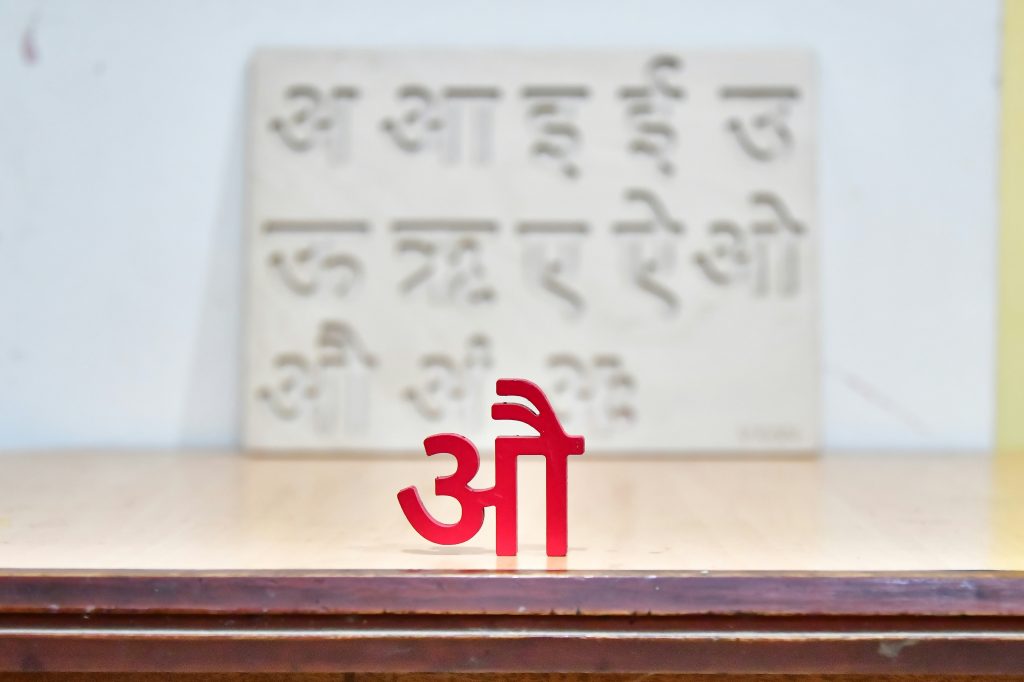
Let me guess. You started Duolingo Hindi with genuine excitement, kept a streak going for a few months, and somewhere around the “Family” or “Travel” unit you realized something uncomfortable: you can’t actually read Hindi. You can recognize words when they’re written in English letters, you can pick “नमस्ते” out of a lineup, but if someone handed you a Hindi newspaper, you’d be lost. And the sentences you’ve been practicing—”The elephant is reading a book”—aren’t exactly preparing you for a conversation with your partner’s grandmother.
You’re not failing at Hindi. Duolingo’s Hindi course is widely considered one of its weakest, and most learners hit a hard plateau well before reaching conversational ability. The learners who complain about it the loudest are usually the most committed ones—people who finished the tree and realized they were still beginners.
The short answer: the best Duolingo alternatives for Hindi depend on what specifically went wrong for you. For learning Devanagari, use Write It! Hindi or HindiPod101‘s script series. For vocabulary that actually sticks in real sentences, use Clozemaster. For listening, pair HindiPod101 with Bollywood and Language Reactor. For speaking, use iTalki. Most successful Hindi learners use 2–3 tools in combination, not a single app.
This guide is organized around what you actually need next, depending on where Duolingo left you stranded. We’ll cover script, vocabulary, listening, real conversation, and the intermediate plateau.
Quick Match Table:
| If your problem is… | Best alternative | Why |
|---|---|---|
| Can’t read Devanagari fluently | Write It! Hindi, HindiPod101 script series | Direct script practice with stroke order |
| Vocabulary doesn’t stick / can’t parse real sentences | Clozemaster | Cloze deletion in context with frequency-based sentences |
| Can’t understand spoken Hindi | HindiPod101, Bollywood + Language Reactor | Real audio at varied speeds with subtitle support |
| Need to actually speak | iTalki, Tandem | Live human practice |
| Hit the intermediate wall | Clozemaster, LingQ, native content | High-frequency vocabulary expansion |
Is Duolingo Good for Learning Hindi?
Duolingo is acceptable for absolute beginners learning a few hundred Hindi words and phrases, and like many language learning apps it can help build a strong foundation, but it’s insufficient for reaching conversational ability because real communication still depends on using vocabulary in real-world contexts.
As a foreign language, Hindi is also a longer-haul commitment: the U.S. Foreign Service Institute classifies it as Category IV and estimates about 1,100 class hours for professional proficiency. The Hindi course is significantly shorter than Duolingo’s flagship courses (Spanish, French, German), relies heavily on transliteration rather than Devanagari script, and lacks the Stories, Podcasts, and advanced content available in other languages.
If you’re considering starting Hindi on Duolingo, it can be a fine first month. If you’ve already finished it, you’ve outgrown it.
Why Duolingo Falls Short for Hindi (Specifically)
Duolingo’s Spanish course contains thousands of words across many units. Duolingo Hindi tops out at roughly 1,500 words by generous counts and far fewer skills. You can finish it in a fraction of the time it takes to finish Spanish, and you’ll come out with maybe A1 reading ability.
Three Hindi-specific issues compound this:
1. The transliteration trap. Duolingo leans heavily on romanized Hindi (writing “namaste” instead of “नमस्ते”). It feels easier early on, but it means you’re studying a phonetic crutch, not Hindi. Some alternatives handle the script shift better by letting you start with romanization and move into Devanagari more deliberately. Most learners “complete” the course and still read Devanagari letter-by-letter.
2. Sentence quality. Hindi has rich aspectual verb forms, postpositions, and gender agreement that need many varied examples to internalize. Duolingo’s sentence pool for Hindi is too small to give you that exposure, and its grammar lessons are thin compared with apps like LingoDeer, which break down complex sentence structures and grammar rules much more clearly. You memorize specific sentences instead of absorbing patterns.
3. The intermediate cliff. Even on Duolingo’s strongest courses, the jump from “finished the tree” to “can read a news article” is huge. On Hindi, that cliff arrives at the end of the beginner content. There’s no Stories feature for Hindi. No podcasts. Nothing to bridge the gap. And many apps still teach a more standardized, formal Hindi than the conversational Hindi learners hear in everyday life.
This is why most people who search “Duolingo alternatives for Hindi” aren’t really looking to replace Duolingo. They’re looking for the thing Duolingo didn’t give them—usually more comprehensive resources matched to their learning style, whether that means better grammar, speaking practice, or stronger audio.
How to Choose an Alternative (Before You Download Anything)
Before you install five new apps, answer three questions:
- Where are you actually stuck? Script? Vocabulary recall? Listening comprehension? Speaking?
- Do you want one replacement, or a stack? Honest answer: most successful Hindi learners use 2–3 tools.
- How much time per day do you really have? A 20-minute routine you’ll do daily beats a 2-hour plan you’ll do twice, so fit Hindi into your daily routine in ways you can actually keep up.
The biggest mistake is swapping Duolingo for another all-in-one app and expecting different results. Hindi rewards specialization. Pick a tool for your weakest skill, not for your strongest; how you learn Hindi depends on your learning needs and language goals, not app popularity alone.
The Best Duolingo Alternatives for Hindi, by Use Case
How Do I Learn Devanagari Properly?
If you can’t comfortably read Hindi, fix this first—the Hindi alphabet in Devanagari is the first real literacy hurdle. Everything else gets easier afterwards.
- Write It! Hindi — Walks you through stroke order and lets you trace letters, so it helps with letter recognition and writing practice. Boring but effective.
- HindiPod101’s script lessons — A free YouTube series that explains why Devanagari works the way it does (especially conjuncts like क्ष and ज्ञ that confuse everyone).
- Practice rule: Some apps offer both Devanagari and romanization, which is useful at the start, but transition quickly if you want to write Hindi comfortably. Once you know the letters, force yourself to read short sentences without transliteration for two weeks. The shift will come.
What Should I Use After Duolingo for Hindi Vocabulary?
Here’s the problem Duolingo grads describe most: “I know the words but I can’t read real sentences.” Vocabulary learned in isolation doesn’t transfer to comprehension. To read Hindi fluently, you need to see each word in many different contexts. This is the core insight behind Clozemaster, which helps retain new vocabulary and pick up new Hindi words through repeated sentence exposure.
Clozemaster uses cloze deletion—a well-established second language acquisition technique where you fill in a missing word in a sentence, drawing on surrounding grammar and meaning to retrieve it. Instead of memorizing isolated flashcards, you encounter Hindi vocabulary the way native speakers actually use it.
मुझे हिंदी __ अच्छी लगती है। (भाषा) I like the Hindi language.
You’re not memorizing a card. You’re seeing a word do its job in a real sentence, with all the surrounding grammar—the postposition, the verb agreement, the word order—reinforcing how Hindi actually works. After a few exposures across varied sentences, the word clicks in a way Duolingo’s repetition never quite manages.
Three things make Clozemaster work specifically for the post-Duolingo problem:
- Frequency-based collections. Clozemaster organizes Hindi sentences by how common their vocabulary is. You can drill the most common 100 Hindi words first, then 500, then 1,000, then 5,000, helping you acquire new words more efficiently. This is dramatically more efficient than Duolingo’s tree, which teaches words in topical order regardless of frequency. The most common 1,000 words in Hindi cover roughly 75% of everyday speech, so frequency-first vocabulary is the fastest path to comprehension.
- Devanagari-first by default. Clozemaster doesn’t hide the script behind transliteration. You can toggle romanization, but the default forces you to actually read Hindi—the exact problem Duolingo’s pedagogy creates.
- Massive sentence variety. Hindi’s postpositions (को, से, में, पर, के लिए) blur together until you’ve seen them in hundreds of varied contexts. Clozemaster’s sentence bank is large enough to give you that exposure.
Anki is one of the best additional resources if you want a spaced repetition system for long term memory, with customizable decks of essential Hindi words and phrases that help cement vocabulary through regular review.
LingQ is a useful companion here for longer-form reading once your vocabulary is decent. It works better as a step after you’ve built basic vocabulary than as a starting point.
How Do I Learn to Understand Spoken Hindi and Improve Listening Skills?
Duolingo’s audio is robotic and slow, which does little for listening skills or authentic pronunciation. Real Hindi is fast, full of dropped pronouns, and laced with English (Hinglish is unavoidable). To bridge this:
- HindiPod101 — Genuinely useful audio lessons across levels, with podcasts that build comprehension skills and help you tune into real rhythms, accents, and everyday speech. Skip the upsells; the core content is good.
- Pimsleur — Strong for listening comprehension and speaking practice, with an audio-first method built around authentic conversation practice that suits auditory learners.
- Bollywood with Language Reactor — Install the Language Reactor browser extension, watch on Netflix, and get dual subtitles plus clickable definitions for better cultural context. 3 Idiots, Zindagi Na Milegi Dobara, and Dil Chahta Hai are learner-friendly. Skip historical epics until you’re advanced—the vocabulary is brutal. Watching Bollywood movies also helps you absorb slang, humor, and social cues in a way textbooks rarely do.
- YouTube channels — “Learn Hindi with Anil Mahato” and “Hindi with Kayle” use comprehensible-input style content that complements app learning.
- Pro tip: Watch the same 5-minute clip three times. First with English subtitles, then Hindi subtitles, then no subtitles. You’ll be amazed how much more you catch by round three, and that kind of listening practice supports conversational fluency over time.
How Do I Practice Speaking Hindi?
No app teaches you to speak. Only speaking teaches you to speak.
- iTalki — Find a Hindi tutor for $8–15/hour. Hindi tutor availability is excellent, and a trial lesson can help you check tutor fit before committing.
- Tandem / HelloTalk— Free language exchange. HelloTalk is an innovative app with social features, while both platforms are useful for speaking practice with native speakers, other learners, and other users working in your target language. Be aware that as an English speaker learning Hindi, you’ll be flooded with messages from people wanting to practice English, since many users are there for exchange. Set boundaries early. Exchanging messages also helps with writing practice. Engaging with native speakers through language exchange platforms not only helps learners acquire new vocabulary but also exposes them to slang, idioms, and cultural context that apps may not fully replicate.
- Practical tip: Before your first iTalki session, drill 50 common Hindi sentences in Clozemaster. Going in with sentence patterns already in your ear means you’ll spend the lesson speaking, not freezing.
How Do I Get Past the Hindi Intermediate Plateau?
This is where most Hindi learners quietly quit. Beginner apps don’t have content for you anymore, but native content feels too hard.
- Clozemaster‘s higher-frequency collections (top 5,000 and beyond) keep pushing your vocabulary into the territory where you can actually read news and watch shows without subtitles. The “Fluency Fast Track” mode prioritizes the most useful sentences first.
- LingQ with imported Hindi articles and podcasts.
- Native content with training wheels: BBC Hindi has short, accessible articles. Satyamev Jayate is accessible Hindi for social topics.
Recommended Stacks (Tool Combinations That Work)
The Complete Beginner Stack
- Write It! Hindi (script, 2 weeks, then stop)
- HindiPod101 (foundational lessons)
- Clozemaster (vocabulary in context, starting with most-common-100)
- Time: ~30 min/day
The Post-Duolingo Stack (most readers are here)
- Clozemaster as your daily driver — directly attacks the “I know words but can’t parse sentences” problem
- iTalki once a week for actual speaking
- One Bollywood movie per week with Language Reactor
- Time: 20 min daily + 1 hour weekly tutor + 1 movie
The Bollywood-Motivated Stack
- Language Reactor + your favorite films
- Clozemaster for vocabulary (mine words you encounter in films)
- HelloTalk to chat with Hindi speakers about the films
The Heritage Speaker Refresh Stack
- Skip the script apps if you grew up hearing Hindi
- Clozemaster intermediate collections to fill vocabulary gaps without slogging through beginner material
- iTalki with a tutor who can target specific weaknesses
What About Free Options?
The paid tools genuinely worth paying for, in priority order:
- iTalki tutor sessions — Highest ROI per dollar in language learning.
- Clozemaster Pro— The free version works; Pro unlocks unlimited rounds and listening mode.
- HindiPod101 — Only worth it if you’ll use it daily.
Free things worth knowing about:
- AIIS (American Institute of Indian Studies) Hindi materials
- BBC Learning Hindi
- Hindi Wikipedia’s “Simple Hindi” articles
- The r/Hindi subreddit
The Hidden Hindi Problem No App Solves Well
Here’s something you won’t find in other “best Hindi apps” articles: Hindi has a register problem, and no single app handles it well.
When you say “thank you” in Hindi, you have options:
- थैंक्यू (Thank you — literally the English word, extremely common in cities)
- शुक्रिया (Shukriya — Urdu-origin, warm and common)
- धन्यवाद (Dhanyavaad — Sanskrit-origin, formal, sometimes stiff in conversation)
Apps teach धन्यवाद because it’s “proper Hindi.” Real people may find it oddly formal in casual contexts. Your in-laws in a religious setting might find शुक्रिया too informal.
Hindi exists on a spectrum from heavily Sanskritized (news, government) to heavily Persian/Urdu-influenced (poetry, older Bollywood, everyday speech) to heavily English-influenced (urban, young, technical). Most apps teach a sanitized middle ground that no actual community of speakers uses exclusively.
What to do:
- Pay attention to who you want to talk to. Your conversation partners’ Hindi is the “right” Hindi for you.
- When you encounter a new word, ask a native speaker: “Is this formal or casual? Would young people say this?”
- Exposure to varied sentences—from films, podcasts, and large sentence-bank tools like Clozemaster—gradually trains your ear for register in a way single-curriculum apps can’t.
Frequently Asked Questions
Is Duolingo’s Hindi course finished? Duolingo’s Hindi course is functional but considerably shorter and less developed than its flagship courses. It hasn’t received the Stories, Podcasts, or path expansion features available in Spanish, French, and German.
What’s the best free alternative to Duolingo for Hindi? Clozemaster has a free tier that works well for daily practice, and HindiPod101’s YouTube content is genuinely useful. For speaking, HelloTalk and Tandem are free.
How long does it take to learn Hindi? The U.S. Foreign Service Institute classifies Hindi as a Category III language requiring approximately 1,100 class hours for English speakers to reach professional working proficiency. With consistent self-study using a stack of 2–3 tools, conversational ability is realistic within 1–2 years.
Should I learn Devanagari or stick with transliteration? Learn Devanagari. Transliteration is a crutch that prevents you from reading anything authentic—books, news, signs, social media. Two weeks of focused script practice pays off for years.
Is Clozemaster better than Duolingo for Hindi? For vocabulary acquisition past the absolute beginner stage, yes—Clozemaster’s cloze-deletion format with frequency-based sentences directly addresses Duolingo Hindi’s main weaknesses (limited sentence variety, transliteration dependence, no intermediate content). For pure absolute-beginner gamification, Duolingo is more polished.
The Takeaway
There’s no perfect single replacement for Duolingo Hindi, and that’s actually freeing once you accept it. The learners who succeed treat Hindi as a stack: one tool for script, one for vocabulary in context, one for listening, one for speaking. No single app does everything well.
If you’re just past Duolingo and feeling stuck, the highest-leverage move this week isn’t downloading five new things. It’s picking one tool from two different categories—say, Clozemaster for daily vocabulary in real Hindi sentences, and an iTalki tutor once a week to start using what you’re learning.
If the “I know words but can’t actually read Hindi sentences” problem is what’s frustrating you most, try Clozemaster’s Hindi couse free and see how 15 minutes a day with cloze deletions in real sentences feels different from what Duolingo was giving you. Most learners notice the shift within the first week.
Hindi is genuinely worth the effort. The literature, the films, the conversations you’ll have—they’re waiting on the other side of Devanagari. Duolingo got you started. Something else gets you there.
This post was created by the team at Clozemaster with the help of AI, and edited by Adam Łukasiak.

