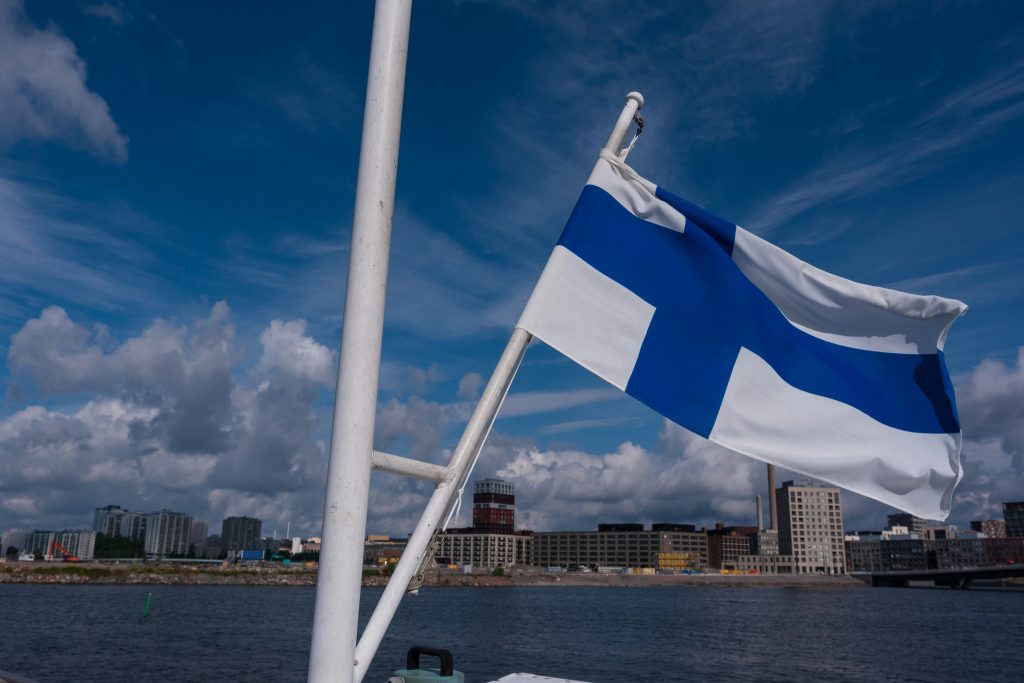
If you’ve finished Duolingo Finnish and you’re wondering what to do next, the answer is simple: you now need to build real-world skills in listening, speaking, and vocabulary. Duolingo is a popular language learning app that offers a Finnish language course, making it accessible for anyone interested in learning Finnish.
Most learners who complete the Finnish course on Duolingo reach around A1 level, with maybe some basic A2 comprehension in familiar topics. Duolingo covers an impressive number of grammar topics and vocabulary, but there is still more to learn to become fluent in the Finnish language.
The most effective next steps after Duolingo Finnish are expanding your Finnish vocabulary through sentence-based exposure, training your ear for spoken Finnish, adding regular conversation practice with a tutor or language partner, and using better language learning resources for intermediate Finnish.
If Duolingo no longer feels useful, that’s normal. It did its job. Now you need a more realistic path to actually learn Finnish beyond the app. Make sure to continue learning and practicing to achieve fluency in the Finnish language.
What Level Are You After Duolingo Finnish?
After completing Duolingo Finnish, most learners are around A1 CEFR level, with some limited A2 reading ability depending on how much extra review they’ve done.
In practical terms, this usually means:
- you recognize around 1,000–1,500 Finnish words
- you understand basic topics like food, weather, family, and daily routines
- you’ve seen common grammar like the partitive, genitive, and some local cases
- you can read simple written Finnish better than you can speak or understand it
This is a real achievement. The Finnish language is distinct from other languages offered on Duolingo, and the platform allows you to learn a language from among many languages, starting from your native tongue. Finnish is one of the more difficult languages for English speakers because of its grammar, case system, word formation, and the large gap between written and spoken language.
So yes, Duolingo gives you a real start. But it is still only the start.
Is Duolingo Enough to Learn Finnish?
No, Duolingo is not enough to become fluent in Finnish.
It is useful for building basic vocabulary, getting familiar with Finnish sentence patterns, introducing core grammar, and creating a daily language learning habit.
But it does not fully prepare you for real conversations with native speakers, fast spoken Finnish, natural word retrieval while speaking, understanding authentic Finnish media, or using Finnish comfortably in daily life.
While language apps like Duolingo are helpful, using other resources—such as different language apps, online courses, podcasts, and real-life practice—is essential for deeper learning and continued progress. The app mainly teaches written Finnish and relies heavily on recognition. Real language use requires much more production, listening comprehension, and exposure to natural Finnish.
If you feel like you finished the course but still cannot understand people or speak confidently, that is not failure. That is exactly where many learners end up after Duolingo. Having a clear idea or strategy for your language learning journey is crucial for achieving fluency.
What Duolingo Finnish Gives You
Duolingo Finnish does provide a useful base. By the end of the course, many learners have basic Finnish vocabulary related to food, family, home, travel, numbers, and everyday activities.
You have likely also seen introductory Finnish grammar, including present tense, question forms, negation, common noun cases, possessive structures, and simple sentence order. Duolingo’s notes sections offer valuable information to help learners understand grammar and usage.
Duolingo mainly teaches formal written Finnish, also called kirjakieli. This is useful for reading and helps you understand how the language works structurally.
It also gives you consistency. A lot of learners quit before building any real foundation. If you completed the course, you already have a better base than many beginners.
What Duolingo Finnish Does Not Give You
This is where the post-Duolingo gap becomes obvious. While Duolingo is a great starting point, it does not provide opportunities for actual conversation, which is essential for developing language skills such as speaking and listening in real-life situations.
Spoken Finnish
Real Finnish conversations often sound very different from what Duolingo teaches.
| Written Finnish | Spoken Finnish |
|---|---|
| minä olen | mä oon |
| mitä sinä teet | mitä sä teet |
| he menevät | ne menee |
| etkö sinä halua | eksä haluu |
If you only know the written forms, spoken Finnish can feel like a completely different language.
Production Skills
Recognizing a word is not the same as being able to say it from memory. Many learners know a lot more Finnish than they can actively use. Duolingo does not explicitly teach production skills like speaking and writing, so you need to actively practice and teach yourself to use Finnish in real situations.
Listening Speed
Duolingo audio is slow, clean, and predictable. Native speakers are not.
Vocabulary Breadth
You may know basic words, but Finnish uses many compounds and word forms that quickly multiply what you need to understand.
Tools like Google Translate and Readlang can help you translate unfamiliar words and phrases, making it easier to expand your vocabulary. Readlang gives you instant translations of words and phrases you don’t know, so you don’t have to interrupt your reading flow to search in a dictionary.
Case Intuition
You may know what the partitive is, but using it naturally takes much more repetition and exposure.
Why Finnish Still Feels Impossible After Duolingo
There are three main reasons learners struggle after finishing the course:
- they cannot understand spoken Finnish
- they understand some Finnish, but cannot produce it
- they simply do not know enough words in context
Many learners find Finnish extremely hard, especially when moving beyond basic app-based learning.
Once you identify which of these is your biggest problem, choosing the right next step becomes much easier.
The Best Next Step After Duolingo Finnish
The best next step depends on your main weakness. Developing a sense of how Finnish works and having a clear idea of your learning strategy will help you choose the most effective path forward.
If You Can’t Understand Real Finnish
This is the most common problem.
You may read simple Finnish reasonably well, but when you hear actual speech, it sounds too fast, too reduced, and too unfamiliar. Listening to audio recordings by native speakers is crucial for improving your comprehension.
Listening to native speakers at a normal pace is much more challenging than understanding the slow, controlled sentences from Duolingo’s text-to-speech system.
Why This Happens
Duolingo teaches written Finnish and uses very controlled audio. Real Finnish speech includes contractions, dropped sounds, colloquial vocabulary, natural rhythm, and informal grammar.
What to Do
Focus on listening practice first.
Good resources include Yle Selkosuomeksi for simplified Finnish news, Yle Areena with Finnish subtitles, Finnish YouTube channels like Finnish with Anni, and beginner-friendly podcasts and short clips.
Best Strategy
Use short clips and repeat them:
- listen without subtitles
- listen with Finnish subtitles
- listen again without subtitles
This is much more effective than endlessly consuming new material you barely understand.
Also learn the most common spoken Finnish patterns early:
- mä = minä
- sä = sinä
- tää = tämä
- mul on = minulla on
- oon = olen
Even this small adjustment can make spoken Finnish much easier to follow.
If You Understand Finnish but Can’t Speak It
This is a production gap.
You recognize words when reading, but when you try to talk, your mind goes blank. Connecting with other users through language exchange and social media platforms can help you find speaking partners online, making it easier than ever before to practice speaking Finnish.
Why This Happens
Duolingo is mostly recognition-based. It helps you identify correct answers, but real speaking requires you to retrieve words and grammar with no prompts.
What to Do
You need regular output practice.
Good options include speaking out loud for 5–10 minutes daily, writing a short diary in Finnish, using italki or another tutor platform, and practicing sentence completion and active recall.
Best Tools
- Clozemaster for fill-in-the-blank sentence practice
- Anki for active recall flashcards
- italki for real conversation practice
- Tandem or HelloTalk for language exchange
- Other language apps such as Memrise, which is a great-looking app built around user-generated vocabulary courses and can supplement your speaking practice
If conversation feels too hard at first, start with writing. Writing still builds production skills and helps you notice gaps in your vocabulary and grammar.
If You Just Don’t Know Enough Finnish Words
This is a vocabulary gap.
You may understand grammar in theory, but every text still has too many unfamiliar words. There are many resources available to help you expand your Finnish vocabulary beyond Duolingo.
Why This Happens
Duolingo covers mostly high-frequency beginner vocabulary. Finnish quickly becomes harder because of compound words, inflected word forms, everyday colloquial vocabulary, and topic-specific words outside beginner lessons.
What to Do
At this stage, you need mass sentence exposure.
Instead of memorizing isolated words, learn vocabulary through real examples.
For example:
- learning kahvi = coffee is useful
- learning Haluan kahvia is better
- learning Juon kahvia aamulla is even better
This helps you absorb word meaning, grammar patterns, case usage, and natural phrasing.
After completing Duolingo Finnish, you will have reached a basic level of reading comprehension, but many learners find it surprisingly difficult to decide what to read next.
Best Resources for Finnish Vocabulary
- Clozemaster: Clozemaster uses thousands of real-world sentences to train recognition of correct grammatical forms through fill-in-the-blank exercises. Its deceptively simple premise—filling in gaps in sentences sourced from an online database—helps reinforce grammar and vocabulary.
- The Great Translation Game: The Great Translation Game lets you practice writing sentences in your target language and provides instant feedback to ensure your sentences are always well-formed.
- Anki
- Graded readers
- Simple Finnish articles
- Subtitle-based learning from Finnish shows
The Best Resources After Duolingo Finnish
If you want to keep learning Finnish efficiently, these are some of the most useful tools.
- Traditional textbooks like ‘Oma suomi’ and ‘Suomen mestari’ provide structured learning paths for Finnish.
- ‘Finnish for Foreigners 2’ is designed specifically for advanced learners at a university level.
- MIT OpenCourseware offers free online course materials for various languages, which can be a valuable resource for learners.
- Exploring other language apps can supplement your learning with additional lessons, vocabulary practice, and interactive exercises.
Clozemaster
Clozemaster is one of the best tools for learners who want to continue after Duolingo with more vocabulary in context.
It helps because it uses sentence-based learning, active recall, a large Finnish course, frequency-based vocabulary, and a smoother transition from beginner to intermediate.
Clozemaster is especially useful if your biggest problem is not knowing enough words or being unable to retrieve them when speaking.
Anki
Anki is best for custom review and long-term memorization.
It helps because it allows flexible flashcards and works well for vocabulary, phrases, and grammar patterns with a strong spaced repetition system.
It is best for learners who like building their own system.
Yle Areena
Yle Areena is one of the best resources for real Finnish listening practice.
It helps because it offers authentic Finnish content, subtitles on many programs, a wide range of material, and a good path toward real comprehension. You can also use Yle Kielikoulu, which allows you to watch Finnish TV with interactive subtitles and instant word translation. For daily practice in easy Finnish, listen to YLE Areena’s Selkouutiset, which is tailored for learners.
Yle Selkosuomeksi
Yle Selkosuomeksi is one of the best options for easier listening and reading.
It helps because it uses simplified Finnish, a slower pace, and provides a good bridge between textbook Finnish and native materials.
italki
italki is one of the best ways to improve your Finnish speaking skills.
It helps because it offers one-on-one lessons, conversation with real people, immediate correction, and confidence-building practice.
Even one or two sessions per month can help a lot.
Uusi kielemme
Uusi kielemme is one of the best grammar references for Finnish learners.
It helps because it gives detailed Finnish grammar explanations and useful examples for reviewing difficult structures.
It is not the most exciting resource, but it is extremely useful.
A Weekly Study Plan After Duolingo Finnish
If you do not replace Duolingo with a routine, it is easy to lose momentum.
Here is a realistic weekly plan for post-Duolingo learners.
Daily: 15–20 Minutes
Do vocabulary-in-context practice.
Good options include Clozemaster, Anki, short sentence drills, or reading simple Finnish texts.
Three Times Per Week: 20 Minutes
Do listening practice.
Use Yle Selkosuomeksi, Finnish YouTube, podcasts for learners, or short clips with subtitles.
Two Times Per Week: 15–20 Minutes
Review grammar or one specific weak point.
Focus on cases, verb types, object rules, spoken versus written Finnish, or common sentence structures.
Once Per Week: 30–45 Minutes
Do speaking or writing practice.
Examples include an italki lesson, language exchange, journaling, self-talk, or describing your day in Finnish.
This kind of structure works much better than random app use.
How Long Does It Take to Become Fluent in Finnish After Duolingo?
Finnish takes time.
For English speakers, reaching strong working proficiency usually requires hundreds and often over a thousand hours of study and exposure. Language learners who practice with native speakers and use their native language as a reference often progress more quickly.
If you completed Duolingo Finnish, you may have invested around 100–150 hours already. That is valuable progress, but it still leaves a lot ahead.
A rough estimate looks like this:
- A1 after Duolingo: basic beginner foundation
- B1 conversational level: often another 300–500 or more hours
- B2 level: usually years of steady practice
- true fluency: depends heavily on speaking, listening, and immersion
The important point is this: if Finnish still feels hard after Duolingo, that is normal.
Frequently Asked Questions
What should I do after Duolingo Finnish?
After Duolingo Finnish, focus on three things: vocabulary expansion, listening practice, and speaking practice. Good next resources include Clozemaster, Yle Areena, Yle Selkosuomeksi, Anki, and italki.
What level is Duolingo Finnish?
Most learners finish at about A1 level, with some limited A2 reading comprehension in familiar topics.
Is Duolingo enough for Finnish?
No. Duolingo is a strong beginner tool, but it is not enough for conversational Finnish or real-world fluency.
What is the best app after Duolingo for Finnish?
For many learners, Clozemaster is one of the best apps after Duolingo Finnish because it builds vocabulary in context and pushes active recall. For speaking, italki is more effective than any app.
Why is spoken Finnish so hard?
Because spoken Finnish differs a lot from written Finnish. Duolingo mostly teaches the written form, so native speech can feel unfamiliar at first.
How can I improve my Finnish speaking skills?
Practice active output regularly. Writing, self-talk, tutoring, and language exchange all help. The key is moving from recognition to production.
What are the best Finnish learning resources after Duolingo?
Some of the best Finnish learning resources after Duolingo are:
Final Thoughts
If you have finished Duolingo Finnish, you are not done learning Finnish. You are done with the beginner app phase.
The next stage is about hearing real Finnish, learning more words in context, practicing real output, building comfort with spoken language, and developing consistency beyond gamified lessons.
The best path forward is not more random app use. It is targeted practice based on your actual gap.
If your biggest struggle is vocabulary, use sentence-based tools like Clozemaster. If listening is the problem, spend more time with Yle Areena and Selkosuomeksi. If speaking is the problem, start producing Finnish every week with a tutor or partner.
Finnish is difficult, but difficulty does not mean you are doing anything wrong. It just means you need the right next step.
Onnea matkaan.
This post was created by the team at Clozemaster with the help of AI, and edited by Adam Łukasiak.

