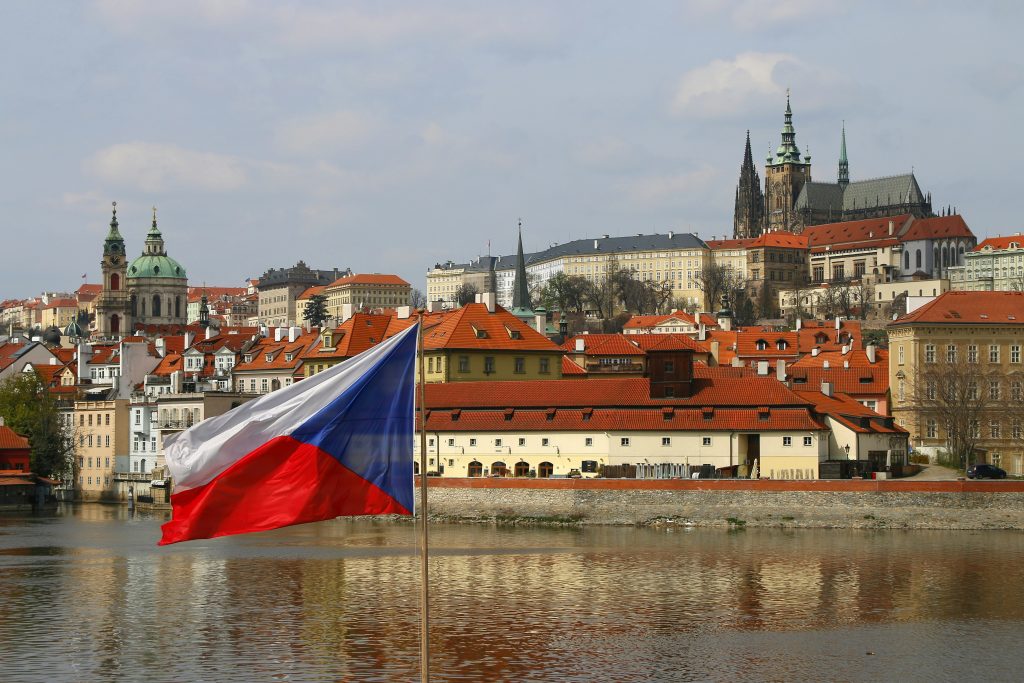
You finished the Czech tree. Or you’re 80% through it. You’ve kept the streak alive for months. And yet, when you click on a Czech news article or try to follow two Czechs talking in a café, it sounds like someone shaking a bag of consonants. You wonder if you’re the problem.
You’re not. Or at least, not entirely.
The Short Answer
Duolingo’s Czech course takes most learners to roughly A1–A2 on the CEFR scale, not to intermediate (B1+). The course teaches around 1,500 unique word lemmas, while functional B1 Czech requires 2,500–3,000. More importantly, Czech’s seven cases and perfective/imperfective verb pairs require thousands of contextual exposures to internalize — far more than any single app course can deliver. To reach intermediate Czech, most learners need to combine sentence-level repetition tools (like Clozemaster), native listening input, an explicit grammar reference, and conversation practice with a tutor. Plan on six to twelve months of consistent daily study after Duolingo to reach a confident B1.
That’s the headline. The rest of this article explains why, and exactly what to do about it.
What “Intermediate Czech” Actually Means
CEFR B1 — the lower boundary of intermediate — sounds abstract until you compare sentences. Let’s make it concrete.
A typical Duolingo-level Czech sentence (roughly A2):
Moje sestra pije kávu v kuchyni. (My sister is drinking coffee in the kitchen.)
Clean. Predictable. Nominative subject, simple verb, locative phrase you’ve drilled fifty times. You can parse this.
A real B1-level sentence, pulled from a Czech news headline:
Vláda schválila návrh zákona, který by měl zjednodušit podmínky pro získání občanství. (The government approved a bill that should simplify the conditions for obtaining citizenship.)
Look at what’s happening here. Návrh zákona (genitive — “bill of law”). Který by měl zjednodušit — a relative clause with conditional auxiliary plus infinitive. Podmínky pro získání (accusative plural followed by pro + accusative, governing a verbal noun in genitive). Občanství — vocabulary you’d never see on Duolingo. At this level, Czech nouns have seven cases, and you need them to build correct sentences.
This isn’t harder grammar in a vague sense. It’s the same grammar Duolingo introduces, but compressed, layered, and applied to vocabulary three times broader than what the tree contains, with word order more flexible than in English, which is why learners often get confused by real sentences. Intermediate Czech isn’t about learning new rules; it’s about reaching the volume of exposure where the rules become automatic and the vocabulary stops being the bottleneck.
Where Duolingo’s Czech Course Actually Ends: The Final Skill
Duolingo’s Czech course teaches roughly 2,000–2,500 word forms, which sounds like a lot until you remember that a single Czech noun has up to 14 forms (7 cases × 2 numbers), and verbs come in aspectual pairs. The unique lemmas — dictionary entries — are closer to 1,500. For comparison, B1 is generally pegged at around 2,500–3,000 lemmas of active vocabulary, and B2 around 4,000–5,000.
So finishing the Duolingo Czech tree leaves you roughly 1,000–1,500 lemmas short of B1 vocabulary, before accounting for production fluency.
But the bigger issue is structural. Three Czech-specific things Duolingo undertrains:
1. Case production across the full paradigm. Duolingo gives you cases, but not enough varied repetition to internalize them across all gender and number combinations. You’ll see v restauraci (locative, feminine) hundreds of times. You’ll see o tom problému (locative, masculine inanimate) maybe a dozen. When you try to produce the latter in conversation, you freeze.
2. Verbal aspect. Czech verbs come in pairs: dělat / udělat, psát / napsat, kupovat / koupit. The choice between imperfective and perfective is one of the deepest features of the language, and Duolingo barely surfaces it as a system. You learn the pairs almost by accident, sentence by sentence, without the explicit drilling that would make the choice automatic.
3. Listening to actual Czech. Duolingo’s text-to-speech is clear, slow, and over-articulated. Real Czechs reduce vowels, drop syllables, and speak fast. Nevím becomes something like nvim. Jsem often sounds like sem. If your only listening input has been Duolingo, real Czech will sound like a different language the first time you hear it.
Why Learn Czech Learners Plateau After Duolingo
Here’s the unglamorous truth about reaching intermediate in any language, but especially in a morphologically rich one like Czech: you need volume. Not new grammar lessons. Not another app. Volume.
Research on second language acquisition suggests learners need anywhere from 20 to 100+ meaningful exposures per word or pattern before it becomes automatic, depending on how distinctive the pattern is. For a single case ending — say, locative singular masculine inanimate (-u or -ě, with rules) — you probably need to encounter it across dozens of different nouns, in dozens of different sentences, before you stop having to think about it.
A rough back-of-envelope calculation: Duolingo’s Czech tree probably gives you somewhere around 30–80 contextual exposures to that specific ending across the full course. That’s enough to recognize it. It’s not enough to produce it under time pressure in conversation. The math just doesn’t work.
This is the actual reason for the post-Duolingo plateau. It’s not that you missed something. It’s that the input-to-internalization ratio for Czech morphology is brutal, and a single short course can’t deliver the necessary reps.
How Clozemaster Addresses the Volume Gap
This is the specific gap Clozemaster was designed to close. Where Duolingo teaches you Czech grammar through a curated tree of roughly 5,000 sentences, it is designed to be fun and effective, using science-backed methods to build core skills, but intermediate Czech still requires active practice and external resources; Clozemaster’s Czech course drills the same patterns across thousands of sentences pulled from language corpora — applying three principles backed by SLA research: retrieval practice (you produce the missing word, not just recognize a translation), spaced repetition (sentences resurface based on your accuracy), and comprehensible input at scale (varied vocabulary, consistent patterns).
In practice, this looks like: you see a sentence with one word missing, you fill in the blank as explicit outside practice, and you move to the next sentence.
Mluvili jsme o tom ____ celý večer. (problém)
(We talked about that problem all evening.)
…you have to actively produce problému (locative singular masculine inanimate). Then you see another locative sentence with a different noun. Then another. The pattern gets reinforced through variation, which is exactly what the brain needs to generalize a rule rather than memorize instances.
The Czech-specific advantage is that the sentences come from natural sources, so you encounter realistic collocations and phrasings — the kind of language Czechs actually use, not the simplified scaffolding of a course tree. The “Fluency Fast Track” orders sentences by frequency, so even short daily sessions hit the words you’re most likely to meet in real Czech first.
A Realistic Path from A2 to B1 in the Czech Language
Forget app lists. Here’s a stack of four input types, each addressing a specific gap. Use all four; skipping any one of them is why people get stuck.
1. High-volume contextual sentence exposure
This is the workhorse, and where Clozemaster fits. Your goal at this stage is to move grammar patterns from “I recognize this” to “this comes out automatically.” The way to do that is sentence-level reps, with patterns you’ve already learned, applied to vocabulary that keeps expanding. Aim for 15–20 minutes a day.
2. Listening input above your level
You need to retrain your ears. Start with these, in roughly this order:
- SlowCzech — designed for learners, paced humanely
- Czech with a Real Teacher on YouTube — explanations in English, real Czech examples
- ČT24 (Czech public news) with the Czech subtitles on — you’ll catch maybe 40% at first
- Czech podcasts like Vinohradská 12— fast, native-paced, no concessions
The trick: don’t wait until you “feel ready.” You become ready by struggling through input slightly above your level. Five minutes a day of this beats one heroic hour a week.
3. Explicit grammar reference
When you hit a pattern in a podcast or sentence and can’t figure out why it’s that form, you need a grammar to look things up. Czech verb endings present one of the early challenges for many learners, since they vary a lot by tense and subject. Czech also has a system of clitics that often sends learners to a reference grammar, because the clitic cluster follows a fixed order in the sentence that is not very intuitive at first. Czech: An Essential Grammar by James Naughton is the standard. Don’t read it cover to cover — that’s not what grammars are for. Use it like a dictionary: look up what’s confusing you in the moment.
4. Output practice with a tutor
At some point — usually around the high A2 / low B1 transition — you have to start producing language under pressure. italki has plenty of Czech tutors at reasonable rates. The instruction I’d give your tutor: “Don’t teach me grammar. Make me talk for 30 minutes about my week, and correct my case endings and aspect choices in real time.”
This is the thing apps cannot do. You need a human listening for the specific errors you make under cognitive load and pointing them out before they fossilize.
Should You Quit Duolingo?
No, but you should demote it.
Duolingo is excellent at one thing: getting you to open the app every day. The streak mechanic, the gamification, and even Duo nudging you with fun challenges and points are real assets when your alternative is doing nothing, and those game-like features can meaningfully boost motivation and engagement. If Duolingo is the reason you study Czech daily, keep it.
But once you’re past the basic vocabulary and grammar phase — let’s say, halfway through the tree — Duolingo should become the review tool, not the engine. The engine should be high-volume sentence repetition (Clozemaster), listening input (podcasts and YouTube), and output practice (a tutor).
A reasonable weekly schedule at the A2 → B1 transition:
- 15–20 min/day Clozemaster for sentence-level reinforcement and vocabulary expansion
- 10 min/day Duolingo if you enjoy it, for review and streak maintenance
- 15–20 min/day listening to Czech podcasts or YouTube
- 1× per week 30–60 min with a tutor on italki
- As needed grammar lookups when something confuses you
That’s roughly 45–60 minutes a day, and it’s the kind of stack that moves people from late beginner to functional intermediate over six to twelve months.
Signs You’ve Actually Reached Intermediate Czech
Forget course completion percentages. Here’s a real checklist. If you can do most of these comfortably, you’re at B1. If you can do all of them, you’re closer to B2.
- Read a Czech news headline and understand the gist without a dictionary
- Follow a Czech YouTuber speaking at normal pace, even if you miss specific words
- Hold a 15-minute conversation about your week, your work, or a recent trip — making mistakes, but communicating
- Use the right case after common prepositions (v, na, o, s, k, do, od) without stopping to think
- Choose between imperfective and perfective in past-tense narration with reasonable accuracy
- Recognize when a Czech speaker has used a diminutive, a colloquial form, or obecná čeština (the common spoken variety, distinct from textbook Czech)
- Write a short email in Czech — to a tutor, a landlord, a shop — and have it be understood, even if not perfect
That last point about obecná čeština is one most courses skip entirely. Czechs in everyday speech often say dobrej instead of dobrý, můžu instead of mohu, and use endings like -ej and -ýma in ways that look wrong if you only know textbook Czech. Recognizing this gap is itself a sign you’ve leveled up.
Common Questions
What CEFR level does Duolingo Czech get you to?
Approximately A1–A2. The course teaches around 1,500 unique lemmas and provides limited drilling of Czech’s seven cases and verbal aspect, both of which require far more volume than any single tree offers.
What’s the best Duolingo alternative for intermediate Czech?
There isn’t a single replacement, because no one tool covers all four learning needs (sentence volume, listening, grammar reference, output). For the sentence-volume piece specifically, Clozemaster is the closest direct alternative, since its cloze format drills production rather than recognition. Pair it with native listening input and a tutor. Community-based forums can also be helpful, especially for shared lists, flashcards, word-order tips, and Czech culture discussions; one user contribution often cited is Essah’s compiled list of the best resources on the Duolingo Czech for English speakers website, alongside older notes collected by learners.
How long does it take to go from finishing Duolingo Czech to B1?
Roughly six to twelve months of consistent daily study (45–60 minutes), assuming a balanced stack of input types rather than relying on any single resource.
Why is Czech harder than Spanish or French on Duolingo?
Two reasons: the Czech course is significantly shorter than the major Romance language courses, and Czech itself has heavier morphological demands (seven cases, aspect pairs, complex consonant clusters) that require more contextual exposure to internalize.
The Takeaway
Duolingo can give you a foundation in Czech. It cannot give you intermediate Czech, and the reason isn’t a flaw in the app — it’s that Czech demands more volume, more variety, and more real input than any single course can provide.
The path forward isn’t another app that promises a shortcut. It’s accepting that you need thousands of contextual exposures to internalize Czech morphology, hundreds of hours of listening to natural speech to train your ear, and real conversation to convert recognition into production. Clozemaster fills the volume-of-input gap; podcasts fill the listening gap; tutors fill the production gap; a grammar fills the reference gap. Each tool does one job well.
If you want to start closing the volume gap today, the Czech course on Clozemaster is a low-friction way to begin — pick the Fluency Fast Track and do 20 sentences. You’ll see immediately whether the cloze format clicks for you, and whether the patterns you half-know from Duolingo start to firm up under repetition.
Hodně štěstí. Good luck. Czech is a hard language, and the fact that you’ve made it to the post-Duolingo plateau means you’re already further than most people who start. Now comes the interesting part.
This post was created by the team at Clozemaster with the help of AI, and edited by Adam Łukasiak.

